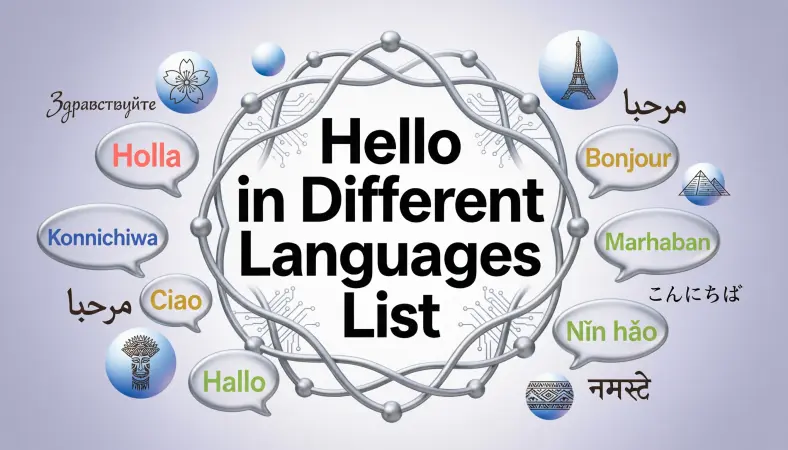
The keyword hello in different languages list means learning how to say the greeting “hello” in many languages around the world. “Hello” is one of the most common words people use when meeting someone, starting a conversation, or showing politeness.
Many users search for “hello in different languages list” to learn basic greetings for travel, education, communication, or cultural knowledge.
In this article, you will find how to say “hello” in 75 different countries, along with pronunciation, usage, and simple examples. This helps beginners understand and use greetings easily.
How to Say “hello in different languages list” in 75 Different Languages
1. United States
Word: Hello
Pronunciation: heh-loh
Uses: Common greeting in English conversations.
Example:
Hello, how are you?
She said hello to her teacher.
2. United Kingdom
Word: Hello
Pronunciation: heh-loh
Uses: Formal and informal greeting.
Example:
Hello, nice to meet you.
He waved and said hello.
3. Spain
Word: Hola
Pronunciation: oh-la
Uses: Common Spanish greeting.
Example:
Hola, amigo.
She said hola to everyone.
4. France
Word: Bonjour
Pronunciation: bon-zhoor
Uses: Polite daytime greeting.
Example:
Bonjour, madam.
He said bonjour at the shop.
5. Germany
Word: Hallo
Pronunciation: hah-loh
Uses: Casual greeting.
Example:
Hallo, wie geht’s?
She greeted him with hallo.
6. Italy
Word: Ciao
Pronunciation: chow
Uses: Informal hello or goodbye.
Example:
Ciao, Marco.
She said ciao and smiled.
7. Portugal
Word: Olá
Pronunciation: oh-la
Uses: Everyday greeting.
Example:
Olá, tudo bem?
He said olá on the phone.
8. Netherlands
Word: Hallo
Pronunciation: hah-loh
Uses: Common greeting.
Example:
Hallo, vriend.
She said hallo politely.
9. Sweden
Word: Hej
Pronunciation: hey
Uses: Informal greeting.
Example:
Hej, how are you?
He said hej to me.
10. Norway
Word: Hei
Pronunciation: hay
Uses: Casual greeting.
Example:
Hei, welcome.
She said hei happily.
11. Denmark
Word: Hej
Pronunciation: hi
Uses: Friendly greeting.
Example:
Hej, nice day.
He said hej first.
12. Finland
Word: Hei
Pronunciation: hey
Uses: Informal greeting.
Example:
Hei, ystävä.
She said hei softly.
13. Poland
Word: Cześć
Pronunciation: cheshch
Uses: Informal greeting.
Example:
Cześć, how are you?
He said cześć to friends.
14. Russia
Word: Privet
Pronunciation: pree-vyet
Uses: Casual greeting.
Example:
Privet, Ivan.
She said privet cheerfully.
15. Ukraine
Word: Pryvit
Pronunciation: pri-veet
Uses: Informal greeting.
Example:
Pryvit, friend.
He said pryvit kindly.
16. Greece
Word: Yassas
Pronunciation: yah-sas
Uses: Polite greeting.
Example:
Yassas, teacher.
She said yassas politely.
17. Turkey
Word: Merhaba
Pronunciation: mehr-hah-bah
Uses: Common greeting.
Example:
Merhaba, nasılsın?
He said merhaba warmly.
18. Saudi Arabia
Word: Salam
Pronunciation: sah-lam
Uses: Respectful greeting.
Example:
Salam, my friend.
She greeted him with salam.
19. United Arab Emirates
Word: Marhaba
Pronunciation: mar-hah-bah
Uses: Friendly greeting.
Example:
Marhaba, welcome.
He said marhaba happily.
20. Israel
Word: Shalom
Pronunciation: shah-lohm
Uses: Hello and peace greeting.
Example:
Shalom, David.
She said shalom kindly.
21. India
Word: Namaste
Pronunciation: nah-mah-stay
Uses: Respectful greeting.
Example:
Namaste, sir.
She greeted him with namaste.
22. Pakistan
Word: Assalamualaikum
Pronunciation: ah-sah-lah-mu-ah-lay-kum
Uses: Islamic greeting.
Example:
Assalamualaikum, brother.
He said assalamualaikum first.
23. Bangladesh
Word: Nomoskar
Pronunciation: no-mos-kar
Uses: Respectful greeting.
Example:
Nomoskar, welcome.
She said nomoskar politely.
24. China
Word: Ni Hao
Pronunciation: nee how
Uses: Standard greeting.
Example:
Ni hao, teacher.
He said ni hao with a smile.
25. Japan
Word: Konnichiwa
Pronunciation: kon-nee-chee-wah
Uses: Daytime greeting.
Example:
Konnichiwa, friend.
She said konnichiwa warmly.
26. South Korea
Word: Annyeong
Pronunciation: an-yong
Uses: Casual greeting.
Example:
Annyeong, how are you?
He said annyeong happily.
27. Thailand
Word: Sawadee
Pronunciation: sah-wah-dee
Uses: Polite greeting.
Example:
Sawadee, welcome.
She said sawadee kindly.
28. Vietnam
Word: Xin Chao
Pronunciation: sin chow
Uses: Formal greeting.
Example:
Xin chao, teacher.
He said xin chao politely.
29. Indonesia
Word: Halo
Pronunciation: hah-loh
Uses: Common greeting.
Example:
Halo, friend.
She said halo on the phone.
30. Malaysia
Word: Hai
Pronunciation: hi
Uses: Casual greeting.
Example:
Hai, how are you?
He said hai first.
31. Philippines
Word: Kamusta
Pronunciation: kah-moo-stah
Uses: Friendly greeting.
Example:
Kamusta, Maria.
She said kamusta happily.
32. Nepal
Word: Namaste
Pronunciation: nah-mah-stay
Uses: Respectful greeting.
Example:
Namaste, teacher.
He said namaste politely.
33. Sri Lanka
Word: Ayubowan
Pronunciation: ah-yoo-bo-wan
Uses: Formal greeting.
Example:
Ayubowan, welcome.
She said ayubowan kindly.
34. Iran
Word: Salam
Pronunciation: sah-lam
Uses: Common greeting.
Example:
Salam, Ali.
He said salam warmly.
35. Iraq
Word: Salam
Pronunciation: sah-lam
Uses: Respectful greeting.
Example:
Salam, my friend.
She greeted him with salam.
36. Afghanistan
Word: Salam
Pronunciation: sah-lam
Uses: Daily greeting.
Example:
Salam, brother.
He said salam first.
37. Egypt
Word: Ahlan
Pronunciation: ah-lan
Uses: Friendly greeting.
Example:
Ahlan, welcome.
She said ahlan happily.
38. Kenya
Word: Jambo
Pronunciation: jam-boh
Uses: Common greeting.
Example:
Jambo, friend.
He said jambo kindly.
39. Tanzania
Word: Jambo
Pronunciation: jam-boh
Uses: Friendly greeting.
Example:
Jambo, welcome.
She said jambo warmly.
40. Ethiopia
Word: Selam
Pronunciation: seh-lam
Uses: Common greeting.
Example:
Selam, how are you?
He said selam politely.
41. Nigeria
Word: Sannu
Pronunciation: sah-noo
Uses: Hausa greeting.
Example:
Sannu, friend.
She said sannu kindly.
42. South Africa
Word: Sawubona
Pronunciation: sah-woo-boh-nah
Uses: Zulu greeting.
Example:
Sawubona, welcome.
He said sawubona politely.
43. Morocco
Word: Salam
Pronunciation: sah-lam
Uses: Common greeting.
Example:
Salam, my friend.
She greeted him with salam.
44. Algeria
Word: Salam
Pronunciation: sah-lam
Uses: Daily greeting.
Example:
Salam, welcome.
He said salam kindly.
45. Tunisia
Word: Ahlan
Pronunciation: ah-lan
Uses: Friendly greeting.
Example:
Ahlan, how are you?
She said ahlan warmly.
46. Brazil
Word: Olá
Pronunciation: oh-la
Uses: Common greeting.
Example:
Olá, friend.
He said olá happily.
47. Mexico
Word: Hola
Pronunciation: oh-la
Uses: Everyday greeting.
Example:
Hola, Maria.
She said hola kindly.
48. Argentina
Word: Hola
Pronunciation: oh-la
Uses: Casual greeting.
Example:
Hola, welcome.
He said hola politely.
49. Chile
Word: Hola
Pronunciation: oh-la
Uses: Friendly greeting.
Example:
Hola, how are you?
She said hola warmly.
50. Colombia
Word: Hola
Pronunciation: oh-la
Uses: Common greeting.
Example:
Hola, friend.
He greeted her with hola.
51. Peru
Word: Hola
Pronunciation: oh-la
Uses: Everyday greeting.
Example:
Hola, teacher.
She said hola first.
52. Canada
Word: Hello
Pronunciation: heh-loh
Uses: Standard greeting.
Example:
Hello, nice to meet you.
He said hello politely.
53. Australia
Word: Hello
Pronunciation: heh-loh
Uses: Common greeting.
Example:
Hello, mate.
She said hello warmly.
54. New Zealand
Word: Kia Ora
Pronunciation: kee-ah oh-rah
Uses: Maori greeting.
Example:
Kia ora, welcome.
He said kia ora kindly.
55. Ireland
Word: Dia Dhuit
Pronunciation: dee-ah gwit
Uses: Traditional greeting.
Example:
Dia dhuit, friend.
She said dia dhuit politely.
56. Scotland
Word: Hello
Pronunciation: heh-loh
Uses: Common greeting.
Example:
Hello, how are you?
He said hello first.
57. Wales
Word: Helo
Pronunciation: heh-loh
Uses: Welsh greeting.
Example:
Helo, welcome.
She said helo kindly.
58. Switzerland
Word: Grüezi
Pronunciation: groo-et-see
Uses: Formal greeting.
Example:
Grüezi, sir.
He said grüezi politely.
59. Austria
Word: Hallo
Pronunciation: hah-loh
Uses: Casual greeting.
Example:
Hallo, friend.
She said hallo warmly.
60. Belgium
Word: Bonjour
Pronunciation: bon-zhoor
Uses: Polite greeting.
Example:
Bonjour, welcome.
He said bonjour kindly.
61. Czech Republic
Word: Ahoj
Pronunciation: ah-hoy
Uses: Informal greeting.
Example:
Ahoj, how are you?
She said ahoj happily.
62. Slovakia
Word: Ahoj
Pronunciation: ah-hoy
Uses: Friendly greeting.
Example:
Ahoj, friend.
He said ahoj warmly.
63. Hungary
Word: Szia
Pronunciation: see-yah
Uses: Informal greeting.
Example:
Szia, welcome.
She said szia politely.
64. Romania
Word: Salut
Pronunciation: sah-loot
Uses: Casual greeting.
Example:
Salut, how are you?
He said salut kindly.
65. Bulgaria
Word: Zdravei
Pronunciation: zdrah-vey
Uses: Friendly greeting.
Example:
Zdravei, friend.
She said zdravei warmly.
66. Serbia
Word: Zdravo
Pronunciation: zdrah-voh
Uses: Common greeting.
Example:
Zdravo, welcome.
He said zdravo politely.
67. Croatia
Word: Bok
Pronunciation: boh-k
Uses: Informal greeting.
Example:
Bok, how are you?
She said bok happily.
68. Slovenia
Word: Zdravo
Pronunciation: zdrah-voh
Uses: Casual greeting.
Example:
Zdravo, friend.
He said zdravo kindly.
69. Lithuania
Word: Labas
Pronunciation: lah-bas
Uses: Common greeting.
Example:
Labas, welcome.
She said labas politely.
70. Latvia
Word: Sveiki
Pronunciation: sveh-kee
Uses: Polite greeting.
Example:
Sveiki, teacher.
He said sveiki warmly.
71. Estonia
Word: Tere
Pronunciation: teh-reh
Uses: Formal greeting.
Example:
Tere, how are you?
She said tere kindly.
72. Iceland
Word: Halló
Pronunciation: hah-loh
Uses: Common greeting.
Example:
Halló, friend.
He said halló politely.
73. Mongolia
Word: Sain Bainaa
Pronunciation: sign by-nah
Uses: Respectful greeting.
Example:
Sain bainaa, welcome.
She said sain bainaa warmly.
74. Cambodia
Word: Sua Sdei
Pronunciation: soo-ah sday
Uses: Polite greeting.
Example:
Sua sdei, friend.
He said sua sdei kindly.
75. Laos
Word: Sabaidee
Pronunciation: sah-bye-dee
Uses: Friendly greeting.
Example:
Sabaidee, welcome.
She said sabaidee happily.
Conclusion
Learning how to say “hello” in different languages helps people communicate and connect with others around the world. A simple greeting shows respect, builds friendships, and helps us understand different cultures. By using these greetings, you can easily connect with people from different countries and languages.